Different Ways Psychoactive Drugs Can Affect the Brain's Ability to Send and Receive Messages.
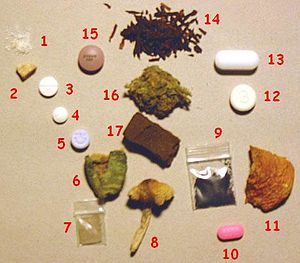
A psychoactive drug, psychopharmaceutical, psychoactive agent, or psychotropic drug, is a chemical substance that changes nervous system role and results in alterations in perception, mood, consciousness, cognition, or behavior.[one] These substances may exist used medically; recreationally; to purposefully improve functioning or alter one'south consciousness; as entheogens for ritual, spiritual, or shamanic purposes; or for research. Some categories of psychoactive drugs, which have therapeutic value, are prescribed by physicians and other healthcare practitioners. Examples include anesthetics, analgesics, anticonvulsant and antiparkinsonian drugs as well as medications used to treat neuropsychiatric disorders, such as antidepressants, anxiolytics, antipsychotics, and stimulant medications. Some psychoactive substances may exist used in the detoxification and rehabilitation programs for persons dependent on or fond to other psychoactive drugs.
Psychoactive substances oft bring nigh subjective (although these may be considerately observed) changes in consciousness and mood that the user may observe rewarding and pleasant (e.g., euphoria or a sense of relaxation) or advantageous in an considerately observable or measurable way (e.g. increased alacrity). Substances which are rewarding and thus positively reinforcing have the potential to induce a land of habit – compulsive drug utilize despite negative consequences. In addition, sustained use of some substances may produce physical or psychological dependence or both, associated with somatic or psychological-emotional withdrawal states respectively. Drug rehabilitation attempts to reduce addiction, through a combination of psychotherapy, support groups, and other psychoactive substances. Conversely, certain psychoactive drugs may be so unpleasant that the person volition never apply the substance once more. This is especially truthful of certain deliriants (eastward.1000. Jimson weed), powerful dissociatives (e.g. PCP, ketamine), and classic psychedelics (eastward.g. LSD, psilocybin), in the form of a "bad trip".
Psychoactive drug misuse, dependence and addiction take resulted in legal measures and moral fence. Governmental controls on industry, supply and prescription endeavour to reduce problematic medical drug apply. Upstanding concerns have too been raised most over-use of these drugs clinically, and near their marketing by manufacturers. Popular campaigns to decriminalize or legalize sure recreational drug use (e.g. cannabis) are besides ongoing.
History [edit]
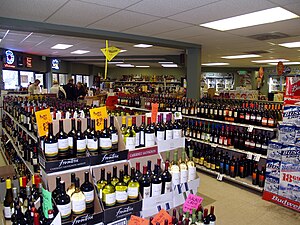
Alcohol is a widely used and driveling psychoactive drug. The global alcoholic drinks market was expected to exceed $1 trillion in 2013.[2] Beer is the tertiary-most popular drink overall, after water and tea.[3]
Psychoactive drug use can be traced to prehistory. There is archaeological evidence of the use of psychoactive substances (generally plants) dating back at least 10,000 years, and historical evidence of cultural use over the by five,000 years.[4] The chewing of coca leaves, for example, dates back over eight,000 years ago in Peruvian society.[5] [half dozen]
Medicinal use is i of import facet of psychoactive drug usage. Yet, some accept postulated that the urge to modify one's consciousness is as main as the bulldoze to satiate thirst, hunger or sexual want.[7] Supporters of this belief argue that the history of drug use and even children's desire for spinning, swinging, or sliding indicate that the drive to change one's country of listen is universal.[8]
One of the start people to articulate this bespeak of view, set bated from a medicinal context, was American writer Fitz Hugh Ludlow (1836–1870) in his book The Hasheesh Eater (1857):
[D]rugs are able to bring humans into the neighborhood of divine feel and can thus acquit us up from our personal fate and the everyday circumstances of our life into a higher form of reality. It is, however, necessary to understand precisely what is meant by the use of drugs. We do non hateful the purely physical craving...That of which nosotros speak is something much higher, namely the knowledge of the possibility of the soul to enter into a lighter being, and to take hold of a glimpse of deeper insights and more magnificent visions of the beauty, truth, and the divine than we are normally able to spy through the cracks in our prison house jail cell. Only there are not many drugs which accept the ability of stilling such craving. The entire catalog, at to the lowest degree to the extent that research has thus far written it, may include just opium, hashish, and in rarer cases alcohol, which has enlightening effects simply upon very item characters.[9]
During the 20th century, many governments across the world initially responded to the use of recreational drugs by banning them and making their utilize, supply, or merchandise a offense. A notable example of this was Prohibition in the The states, where booze was fabricated illegal for 13 years. Even so, many governments, government officials and persons in police force enforcement have concluded that illicit drug use cannot be sufficiently stopped through criminalization. Organizations such every bit Law Enforcement Against Prohibition (LEAP) have come to such a determination, assertive:
[T]he existing drug policies take failed in their intended goals of addressing the bug of crime, drug abuse, addiction, juvenile drug use, stopping the menstruation of illegal drugs into this country and the internal sale and utilize of illegal drugs. By fighting a war on drugs the regime has increased the problems of guild and made them far worse. A organisation of regulation rather than prohibition is a less harmful, more ethical and a more effective public policy.[x] [ failed verification ]
In some countries, there has been a move toward harm reduction by health services, where the apply of illicit drugs is neither condoned nor promoted, merely services and support are provided to ensure users have adequate factual information readily available, and that the negative furnishings of their apply be minimized. Such is the example of the Portuguese drug policy of decriminalization, which achieved its primary goal of reducing the agin health furnishings of drug abuse.[11]
Purposes [edit]
Psychoactive substances are used by humans for a number of dissimilar purposes to reach a specific stop. These uses vary widely between cultures. Some substances may have controlled or illegal uses while others may take shamanic purposes, and all the same others are used medicinally. Other examples would be social drinking, nootropic, or sleep aids. Caffeine is the world's most widely consumed psychoactive substance, merely different many others, it is legal and unregulated in nearly all jurisdictions. In North America, xc% of adults swallow caffeine daily.[12]
Psychoactive drugs are divided into different groups according to their pharmacological effects. Usually used psychoactive drugs and groups:
- Anxiolytics. Used to reduce symptoms of anxiety and panic.
-
- Instance: benzodiazepines, barbiturates
- Empathogen–entactogens
-
- Example: MDMA (ecstasy), MDA, vi-APB, AMT
- Stimulants ("uppers"). This category comprises substances that wake one up, stimulate the mind, and may crusade euphoria, simply practice non affect perception.[ clarification needed ]
-
- Examples: amphetamine, caffeine, cocaine, nicotine, modafinil
- Depressants ("downers"), including sedatives, hypnotics, and opioids. This category includes all of the calmative, sleep-inducing, feet-reducing, anesthetizing substances, which sometimes induce perceptual changes, such equally dream images, and also oft evoke feelings of euphoria.
-
- Examples: ethanol (alcoholic beverages), opioids, cannabis, barbiturates, benzodiazepines.
- Hallucinogens, including psychedelics, dissociatives and deliriants. This category encompasses all those substances that produce distinct alterations in perception, sensation of space and time, and emotional states[13]
-
- Examples: psilocybin, LSD, DMT (Northward,North-Dimethyltryptamine), mescaline, Salvia divinorum, Nitrous Oxide, and Scopolamine
Uses [edit]
Anesthesia [edit]
Full general anesthetics are a class of psychoactive drug used on people to block physical pain and other sensations. About anesthetics induce unconsciousness, allowing the person to undergo medical procedures similar surgery without the feelings of physical pain or emotional trauma.[14] To induce unconsciousness, anesthetics touch on the GABA and NMDA systems. For instance, propofol is a GABA agonist,[fifteen] and ketamine is an NMDA receptor antagonist.[16]
Pain direction [edit]
Psychoactive drugs are often prescribed to manage hurting. The subjective experience of pain is primarily regulated by endogenous opioid peptides. Thus, hurting can often be managed using psychoactives that operate on this neurotransmitter arrangement, too known as opioid receptor agonists. This class of drugs tin be highly addictive, and includes opiate narcotics, like morphine and codeine.[17] NSAIDs, such every bit aspirin and ibuprofen, are besides analgesics. These agents also reduce eicosanoid-mediated inflammation by inhibiting the enzyme cyclooxygenase.
Mental disorders [edit]

Psychiatric medications are psychoactive drugs prescribed for the management of mental and emotional disorders, or to help in overcoming challenging beliefs.[18] There are six major classes of psychiatric medications:
- Antidepressants treat disorders such as clinical depression, dysthymia, anxiety, eating disorders and borderline personality disorder.[nineteen]
- Stimulants, used to treat disorders such equally attention deficit hyperactivity disorder and narcolepsy, and for weight reduction.
- Antipsychotics, used to treat psychotic symptoms, such as those associated with schizophrenia or astringent mania, or equally adjuncts to relieve clinical depression.
- Mood stabilizers, used to treat bipolar disorder and schizoaffective disorder.
- Anxiolytics, used to care for feet disorders.
- Depressants, used every bit hypnotics, sedatives, and anesthetics, depending upon dosage.
In addition, several psychoactive substances are currently employed to treat various addictions. These include acamprosate or naltrexone in the treatment of alcoholism, or methadone or buprenorphine maintenance therapy in the case of opioid addiction.[xx]
Exposure to psychoactive drugs can cause changes to the brain that counteract or augment some of their effects; these changes may be beneficial or harmful. However, there is a significant corporeality of evidence that the relapse rate of mental disorders negatively corresponds with the length of properly followed treatment regimens (that is, relapse rate substantially declines over time), and to a much greater degree than placebo.[21]
Recreation [edit]
Many psychoactive substances are used for their mood and perception altering effects, including those with accepted uses in medicine and psychiatry. Examples of psychoactive substances include caffeine, booze, cocaine, LSD, nicotine and cannabis.[22] Classes of drugs oftentimes used recreationally include:
- Stimulants, which activate the central nervous arrangement. These are used recreationally for their euphoric effects.
- Hallucinogens (psychedelics, dissociatives and deliriants), which induce perceptual and cerebral alterations.
- Hypnotics, which depress the central nervous system.
- Opioid analgesics, which also depress the cardinal nervous organization. These are used recreationally considering of their euphoric effects.
- Inhalants, in the forms of gas aerosols, or solvents, which are inhaled as a vapor considering of their stupefying effects. Many inhalants also fall into the in a higher place categories (such every bit nitrous oxide which is as well an analgesic).
In some modern and aboriginal cultures, drug usage is seen every bit a status symbol. Recreational drugs are seen as condition symbols in settings such equally at nightclubs and parties.[23] For example, in aboriginal Egypt, gods were commonly pictured holding hallucinogenic plants.[24]
Because there is controversy nigh regulation of recreational drugs, there is an ongoing debate well-nigh drug prohibition. Critics of prohibition believe that regulation of recreational drug utilize is a violation of personal autonomy and freedom.[25] In the United States, critics have noted that prohibition or regulation of recreational and spiritual drug use might be unconstitutional, and causing more impairment than is prevented.[26]
Some people who take psychoactive drugs feel drug or substance induced psychosis. A 2022 systematic review and meta-analysis by Murrie et al. found that the pooled proportion of transition from substance-induced psychosis to schizophrenia was 25% (95% CI xviii%–35%), compared with 36% (95% CI xxx%–43%) for brief, atypical and not otherwise specified psychoses.[27] Blazon of substance was the principal predictor of transition from drug-induced psychosis to schizophrenia, with highest rates associated with cannabis (vi studies, 34%, CI 25%–46%), hallucinogens (three studies, 26%, CI 14%–43%) and amphetamines (v studies, 22%, CI 14%–34%). Lower rates were reported for opioid (12%), alcohol (10%) and sedative (ix%) induced psychoses. Transition rates were slightly lower in older cohorts but were non affected past sex, country of the study, hospital or customs location, urban or rural setting, diagnostic methods, or duration of follow-up.[27]
Ritual and spiritual [edit]

Timothy Leary was a leading proponent of spiritual hallucinogen use.
Sure psychoactives, particularly hallucinogens, accept been used for religious purposes since prehistoric times. Native Americans have used peyote cacti containing mescaline for religious ceremonies for as long as 5700 years.[28] The muscimol-containing Amanita muscaria mushroom was used for ritual purposes throughout prehistoric Europe.[29]
The utilize of entheogens for religious purposes resurfaced in the Westward during the counterculture movements of the 1960s and 70s. Nether the leadership of Timothy Leary, new spiritual and intention-based movements began to use LSD and other hallucinogens as tools to admission deeper inner exploration. In the United States, the use of peyote for ritual purposes is protected only for members of the Native American Church, which is allowed to cultivate and distribute peyote. However, the 18-carat religious use of peyote, regardless of 1's personal ancestry, is protected in Colorado, Arizona, New Mexico, Nevada, and Oregon.[30]
War machine [edit]
Psychoactive drugs have been used in war machine applications equally non-lethal weapons.
Both military and civilian American intelligence officials are known to have used psychoactive drugs while interrogating captives apprehended in its "state of war on terror". In July 2012 Jason Leopold and Jeffrey Kaye, psychologists and human rights workers, had a Freedom of Information Human action asking fulfilled that confirmed that the utilize of psychoactive drugs during interrogation was a long-standing practice.[31] [32] Captives and former captives had been reporting medical staff collaborating with interrogators to drug captives with powerful psychoactive drugs prior to interrogation since the very offset captives release.[33] [34] In May 2003 recently released Pakistani captive Sha Mohammed Alikhel described the routine use of psychoactive drugs. He said that Jihan Wali, a captive kept in a nearby cell, was rendered catatonic through the use of these drugs.
Additionally, militaries worldwide have used or are using various psychoactive drugs to amend operation of soldiers past suppressing hunger, increasing the power to sustain effort without food, increasing and lengthening wakefulness and concentration, suppressing fear, reducing empathy, and improving reflexes and memory-recall amongst other things.[35] [36]
The offset documented instance of a soldier overdosing on methamphetamine during combat, was the Finnish corporal Aimo Koivunen, a soldier who fought in the Wintertime War and the Continuation War.[37] [38]
Route of administration [edit]
Psychoactive drugs are administered via oral ingestion equally a tablet, capsule, pulverisation, liquid, and potable; via injection past subcutaneous, intramuscular, and intravenous route; via rectum by suppository and enema; and via inhalation by smoking, vaporization and insufflation ("snorting"). The efficiency of each method of administration varies from drug to drug.[39]
The psychiatric drugs fluoxetine, quetiapine, and lorazepam are ingested orally in tablet or sheathing form. Alcohol and caffeine are ingested in potable form; nicotine and cannabis are smoked or vaporized; peyote and psilocybin mushrooms are ingested in botanical class or dried; and crystalline drugs such as cocaine and methamphetamine are commonly insufflated (inhaled or "snorted").
Determinants of effects [edit]
The theory of dosage, prepare, and setting is a useful model in dealing with the furnishings of psychoactive substances, specially in a controlled therapeutic setting as well as in recreational use. Dr. Timothy Leary, based on his ain experiences and systematic observations on psychedelics, adult this theory forth with his colleagues Ralph Metzner, and Richard Alpert (Ram Dass) in the 1960s.[twoscore]
- Dosage
The first factor, dosage, has been a truism since aboriginal times, or at least since Paracelsus who said, "Dose makes the poison." Some compounds are beneficial or pleasurable when consumed in minor amounts, but harmful, deadly, or evoke discomfort in college doses.
- Fix
The set up is the internal attitudes and constitution of the person, including their expectations, wishes, fears, and sensitivity to the drug. This gene is peculiarly important for the hallucinogens, which have the ability to make conscious experiences out of the unconscious. In traditional cultures, ready is shaped primarily by the worldview, health and genetic characteristics that all the members of the culture share.
- Setting
The third aspect is setting, which pertains to the surround, the place, and the time in which the experiences transpire.
This theory clearly states that the effects are equally the event of chemical, pharmacological, psychological, and physical influences. The model that Timothy Leary proposed practical to the psychedelics, although it also applies to other psychoactives.[41]
Furnishings [edit]

Illustration of the major elements of neurotransmission. Depending on its method of action, a psychoactive substance may block the receptors on the postal service-synaptic neuron (dendrite), or block reuptake or affect neurotransmitter synthesis in the pre-synaptic neuron (axon).
Psychoactive drugs operate by temporarily affecting a person's neurochemistry, which in turn causes changes in a person'southward mood, cognition, perception and behavior. There are many ways in which psychoactive drugs tin can touch on the brain. Each drug has a specific action on 1 or more neurotransmitter or neuroreceptor in the brain.
Drugs that increase activeness in particular neurotransmitter systems are called agonists. They act by increasing the synthesis of one or more neurotransmitters, by reducing its reuptake from the synapses, or by mimicking the action by binding directly to the postsynaptic receptor. Drugs that reduce neurotransmitter activity are chosen antagonists, and operate past interfering with synthesis or blocking postsynaptic receptors and so that neurotransmitters cannot bind to them.[42]
Exposure to a psychoactive substance can cause changes in the structure and functioning of neurons, as the nervous arrangement tries to re-establish the homeostasis disrupted by the presence of the drug (run across also, neuroplasticity). Exposure to antagonists for a particular neurotransmitter can increase the number of receptors for that neurotransmitter or the receptors themselves may get more responsive to neurotransmitters; this is called sensitization. Conversely, overstimulation of receptors for a particular neurotransmitter may cause a decrease in both number and sensitivity of these receptors, a process called desensitization or tolerance. Sensitization and desensitization are more than likely to occur with long-term exposure, although they may occur after only a unmarried exposure. These processes are idea to play a role in drug dependence and addiction.[43] Physical dependence on antidepressants or anxiolytics may outcome in worse depression or anxiety, respectively, every bit withdrawal symptoms. Unfortunately, considering clinical depression (likewise called major depressive disorder) is often referred to merely as low, antidepressants are oft requested past and prescribed for patients who are depressed, but not clinically depressed.
Affected neurotransmitter systems [edit]
The following is a cursory table of notable drugs and their primary neurotransmitter, receptor or method of activeness. Many drugs act on more than 1 transmitter or receptor in the brain.[44]
| Neurotransmitter/receptor | Classification | Examples |
|---|---|---|
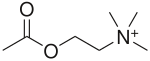 | Cholinergics (acetylcholine receptor agonists) | arecoline, nicotine, piracetam |
| Muscarinic antagonists (acetylcholine receptor antagonists) | scopolamine, benzatropine, dimenhydrinate, diphenhydramine, doxylamine, atropine, quetiapine, olanzapine, most tricyclics | |
| Nicotinic antagonists (acetylcholine receptor antagonists) | memantine, bupropion | |
 | Adenosine receptor antagonists[45] | caffeine, theobromine, theophylline |
 | Dopamine reuptake inhibitors | cocaine, bupropion, methylphenidate, St John's wort, and sure TAAR1 agonists like amphetamine, phenethylamine, and methamphetamine |
| Dopamine releasing agents | Cavendish bananas,[46] TAAR1 agonists similar amphetamine, phenethylamine, and methamphetamine | |
| Dopamine agonists | pramipexole, Ropinirole, L-DOPA (prodrug), memantine | |
| Dopamine antagonists | haloperidol, droperidol, many antipsychotics (e.k., risperidone, olanzapine, quetiapine) | |
| Dopamine partial agonists | LSD, aripiprazole | |
 | GABA reuptake inhibitors | tiagabine, St John'southward wort, vigabatrin, deramciclane |
| GABAA receptor agonists | ethanol, niacin,[47] barbiturates, diazepam, clonazepam, lorazepam, temazepam, alprazolam and other benzodiazepines, zolpidem, eszopiclone, zaleplon and other nonbenzodiazepines, muscimol, phenibut | |
| GABAA receptor positive allosteric modulators | ||
| GABA receptor antagonists | thujone, bicuculline | |
| GABAA receptor negative allosteric modulators | ||
 | Norepinephrine reuptake inhibitors | St John's wort,[48] near non-SSRI antidepressants such every bit amoxapine, atomoxetine, bupropion, venlafaxine, quetiapine, the tricyclics, methylphenidate, SNRIs such every bit duloxetine, venlafaxine, cocaine, tramadol, and certain TAAR1 agonists like amphetamine, phenethylamine, methamphetamine. |
| Norepinephrine releasing agents | ephedrine, PPA, pseudoephedrine, amphetamine, phenethylamine, methamphetamine | |
| Adrenergic agonists | clonidine, guanfacine, phenylephrine | |
| Adrenergic antagonists | carvedilol, metoprolol, mianserin, prazosin, propranolol, trazodone, yohimbine, olanzapine | |
 Serotonin | Serotonin receptor agonists | triptans (e.g. sumatriptan, eletriptan), psychedelics (east.k. lysergic acid diethylamide, psilocybin, mescaline), ergolines (e.g. lisuride, bromocriptine) |
| Serotonin reuptake inhibitors | most antidepressants including St John'south wort, tricyclics such as imipramine, SSRIs (e.g. fluoxetine, sertraline, escitalopram), SNRIs (e.g. duloxetine, venlafaxine) | |
| Serotonin releasing agents | fenfluramine, MDMA (ecstasy), tryptamine | |
| Serotonin receptor antagonists | ritanserin, mirtazapine, mianserin, trazodone, cyproheptadine, memantine, atypical antipsychotics (e.g., risperidone, olanzapine, quetiapine) | |
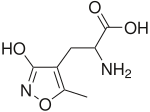 AMPA receptor | AMPA receptor positive allosteric modulators | aniracetam, CX717, piracetam |
| AMPA receptor antagonists | kynurenic acid, NBQX, topiramate | |
 Cannabinoid | Cannabinoid receptor agonists | JWH-018 |
| Cannabinoid receptor partial agonists | Anandamide, THC, cannabidiol, cannabinol | |
| Cannabinoid receptor changed agonists | Rimonabant | |
| Anandamide reuptake inhibitors[49] | LY 2183240, VDM 11, AM 404 | |
| FAAH enzyme inhibitors | MAFP, URB597, Due north-Arachidonylglycine | |
| | NMDA receptor antagonists | ethanol, ketamine, deschloroketamine, 2-Fluorodeschloroketamine, PCP, DXM, Nitrous Oxide, memantine |
| | GHB receptor agonists | GHB, T-HCA |
| Sigma receptor | Sigma-1 receptor agonists | cocaine, DMT, DXM, fluvoxamine, ibogaine, opipramol, PCP, methamphetamine |
| Sigma-2 receptor agonists | methamphetamine | |
| Opioid receptor | μ-opioid receptor agonists | Narcotic opioids (e.g. codeine, morphine, hydrocodone, hydromorphone, oxycodone, oxymorphone, heroin, fentanyl) |
| μ-opioid receptor partial agonists | buprenorphine | |
| μ-opioid receptor inverse agonists | naloxone | |
| μ-opioid receptor antagonists | naltrexone | |
| κ-opioid receptor agonists | salvinorin A, butorphanol, nalbuphine, pentazocine, ibogaine[50] | |
| κ-opioid receptor antagonists | buprenorphine | |
| | H1 receptor antagonists | diphenhydramine, doxylamine, mirtazapine, mianserin, quetiapine, olanzapine, meclozine, most tricyclics |
| H3 receptor antagonists | pitolisant | |
| | Monoamine oxidase inhibitors (MAOIs) | phenelzine, iproniazid, tranylcypromine, selegiline, rasagiline, moclobemide, isocarboxazid, Linezolid, benmoxin, St John's wort, coffee,[51] garlic[52] |
| | Melatonin receptor agonists | agomelatine, melatonin, ramelteon, tasimelteon |
| | Imidazoline receptor agonists | apraclonidine, clonidine, moxonidine, rilmenidine |
| Orexin receptor | Orexin receptor agonists | modafinil [ citation needed ] [ dubious ] |
| Orexin receptor antagonists | SB-334,867, SB-408,124, TCS-OX2-29, suvorexant |
Addiction and dependence [edit]
| Addiction and dependence glossary[53] [54] [55] [56] | |
|---|---|
| |

Comparing of the perceived harm for various psychoactive drugs from a poll among medical psychiatrists specialized in addiction treatment (David Nutt et al. 2007).[57]
Psychoactive drugs are ofttimes associated with addiction or drug dependence. Dependence can be divided into 2 types: psychological dependence, past which a user experiences negative psychological or emotional withdrawal symptoms (e.g., depression) and physical dependence, past which a user must utilise a drug to avoid physically uncomfortable or fifty-fifty medically harmful concrete withdrawal symptoms.[58] Drugs that are both rewarding and reinforcing are addictive; these properties of a drug are mediated through activation of the mesolimbic dopamine pathway, particularly the nucleus accumbens. Non all addictive drugs are associated with physical dependence, eastward.m., amphetamine, and non all drugs that produce physical dependence are addictive drugs, e.grand., caffeine.
Many professionals, self-help groups, and businesses specialize in drug rehabilitation, with varying degrees of success, and many parents effort to influence the actions and choices of their children regarding psychoactives.[59]
Mutual forms of rehabilitation include psychotherapy, support groups and pharmacotherapy, which uses psychoactive substances to reduce cravings and physiological withdrawal symptoms while a user is going through detox. Methadone, itself an opioid and a psychoactive substance, is a mutual treatment for heroin addiction, as is another opioid, buprenorphine. Recent research on addiction has shown some promise in using psychedelics such as ibogaine to treat and even cure drug addictions, although this has withal to go a widely accepted practice.[60] [61]
Legality [edit]

Historical epitome of legal heroin bottle
The legality of psychoactive drugs has been controversial through most of contempo history; the 2d Opium War and Prohibition are ii historical examples of legal controversy surrounding psychoactive drugs. Even so, in contempo years, the near influential document regarding the legality of psychoactive drugs is the Single Convention on Narcotic Drugs, an international treaty signed in 1961 every bit an Act of the Un. Signed by 73 nations including the United States, the USSR, Pakistan, India, and the Great britain, the Single Convention on Narcotic Drugs established Schedules for the legality of each drug and laid out an international agreement to fight addiction to recreational drugs by combatting the auction, trafficking, and use of scheduled drugs.[62] All countries that signed the treaty passed laws to implement these rules within their borders. Yet, some countries that signed the Single Convention on Narcotic Drugs, such as the Netherlands, are more lenient with their enforcement of these laws.[63]
In the United States, the Food and Drug Assistants (FDA) has authority over all drugs, including psychoactive drugs. The FDA regulates which psychoactive drugs are over the counter and which are merely available with a prescription.[64] Nonetheless, certain psychoactive drugs, like booze, tobacco, and drugs listed in the Single Convention on Narcotic Drugs are subject field to criminal laws. The Controlled Substances Act of 1970 regulates the recreational drugs outlined in the Single Convention on Narcotic Drugs.[65] Alcohol is regulated past state governments, but the federal National Minimum Drinking Age Human activity penalizes states for not post-obit a national drinking historic period.[66] Tobacco is also regulated past all fifty state governments.[67] Nigh people have such restrictions and prohibitions of certain drugs, particularly the "hard" drugs, which are illegal in about countries.[68] [69] [70]
In the medical context, psychoactive drugs as a handling for affliction is widespread and generally accustomed. Little controversy exists apropos over the counter psychoactive medications in antiemetics and antitussives. Psychoactive drugs are normally prescribed to patients with psychiatric disorders. Nonetheless, certain critics[ who? ] believe that sure prescription psychoactives, such as antidepressants and stimulants, are overprescribed and threaten patients' sentence and autonomy.[71] [72]
Effect on animals [edit]
A number of animals consume different psychoactive plants, animals, berries and even fermented fruit, becoming intoxicated, such as cats after consuming catnip. Traditional legends of sacred plants oft contain references to animals that introduced humankind to their employ.[73] Animals and psychoactive plants appear to have co-evolved, possibly explaining why these chemicals and their receptors exist within the nervous system.[74]
Widely used psychoactive drugs [edit]
This is a listing of very well-known drugs that are psychoactive. They are both legal and illegal drugs depending on which country.
- Alcohol
- Nicotine
- Caffeine
- Cannabis
- Methamphetamine
- Cocaine
- Heroin
- Ecstasy
- LSD
- Benzodiazepines
- Opioids
- Psilocybin mushrooms
Run into also [edit]
- Contact high
- Counterculture of the 1960s
- Need reduction
- Designer drug
- Drug
- Drug habit
- Drug checking
- Drug rehabilitation
- Hamilton'southward Pharmacopeia
- Difficult and soft drugs
- Harm reduction
- Neuropsychopharmacology
- Psychopharmacology
- Poly drug use
- Project MKULTRA
- Psychedelic plants
- Psychoactive fish
- Recreational drug use
- Responsible drug use
- Self-medication
References [edit]
- Notes
- ^ "Affiliate 1 Alcohol and Other Drugs". The Public Health Bush-league Volume: Facts & approaches to three key public health problems. ISBN0-7245-3361-iii. Archived from the original on 2015-03-28.
- ^ "Will Your Retirement Habitation Have A Liquor License?". Forbes. 26 December 2013. Archived from the original on ix September 2017.
- ^ Nelson, Max (2005). The Barbarian's Drink: A History of Beer in Ancient Europe. Abingdon, Oxon: Routledge. p. i. ISBN0-415-31121-seven . Retrieved 21 September 2010.
- ^ Merlin, M.D (2003). "Archaeological Evidence for the Tradition of Psychoactive Plant Employ in the Old World". Economical Botany. 57 (3): 295–323. doi:ten.1663/0013-0001(2003)057[0295:AEFTTO]ii.0.CO;ii.
- ^ Early Holocene coca chewing in northern Peru Volume: 84 Number: 326 Page: 939–953
- ^ "Coca leaves first chewed 8,000 years ago, says research". BBC News. Dec ii, 2010. Archived from the original on May 23, 2014.
- ^ Siegel, Ronald K (2005). Intoxication: The Universal Drive for Mind-Altering Substances. Park Street Press, Rochester, Vermont. ISBN1-59477-069-7.
- ^ Weil, Andrew (2004). The Natural Mind: A Revolutionary Arroyo to the Drug Problem (Revised ed.). Houghton Mifflin. p. 15. ISBN0-618-46513-eight.
- ^ The Hashish Eater (1857) pg. 181
- ^ "Leap's Mission Statement". Police force Enforcement Confronting Prohibition. Archived from the original on 2008-09-13. Retrieved 2013-05-thirty .
- ^ "5 Years After: Portugal's Drug Decriminalization Policy Shows Positive Results". Scientific American. Archived from the original on 2013-08-fifteen. Retrieved 2013-05-30 .
- ^ Lovett, Richard (24 September 2005). "Coffee: The demon drink?" (fee required). New Scientist (2518). Archived from the original on 24 October 2007. Retrieved 2007-11-19 .
- ^ Bersani FS, Corazza O, Simonato P, Mylokosta A, Levari E, Lovaste R, Schifano F; Corazza; Simonato; Mylokosta; Levari; Lovaste; Schifano (2013). "Drops of madness? Recreational misuse of tropicamide collyrium; early warning alerts from Russia and Italian republic". General Infirmary Psychiatry. 35 (5): 571–3. doi:10.1016/j.genhosppsych.2013.04.013. PMID 23706777.
{{cite journal}}: CS1 maint: multiple names: authors list (link) - ^ Medline Plus. Anesthesia. Archived 2016-07-04 at the Wayback Machine Accessed on July 16, 2007.
- ^ Li X, Pearce RA; Pearce (2000). "Effects of halothane on GABA(A) receptor kinetics: evidence for slowed agonist unbinding". The Journal of Neuroscience. 20 (three): 899–907. doi:x.1523/JNEUROSCI.xx-03-00899.2000. PMC6774186. PMID 10648694.
- ^ Harrison NL, Simmonds MA; Simmonds (1985). "Quantitative studies on some antagonists of N-methyl D-aspartate in slices of rat cerebral cortex". British Journal of Pharmacology. 84 (2): 381–91. doi:10.1111/j.1476-5381.1985.tb12922.x. PMC1987274. PMID 2858237.
- ^ Quiding H, Lundqvist Grand, Boréus LO, Bondesson U, Ohrvik J; Lundqvist; Boréus; Bondesson; Ohrvik (1993). "Analgesic event and plasma concentrations of codeine and morphine later two dose levels of codeine post-obit oral surgery". European Journal of Clinical Pharmacology. 44 (4): 319–23. doi:10.1007/BF00316466. PMID 8513842. S2CID 37268044.
{{cite journal}}: CS1 maint: multiple names: authors list (link) - ^ Matson, Johnny L.; Neal, Daniene (2009). "Psychotropic medication use for challenging behaviors in persons with intellectual disabilities: An overview". Research in Developmental Disabilities. 30 (3): 572–86. doi:10.1016/j.ridd.2008.08.007. PMID 18845418.
- ^ Schatzberg AF (2000). "New indications for antidepressants". The Journal of Clinical Psychiatry. 61 (11): nine–17. PMID 10926050.
- ^ Swift RM (2016). "Pharmacotherapy of Substance Use, Craving, and Astute Abstinence Syndromes". In Sher KJ (ed.). The Oxford Handbook of Substance Use and Substance Use Disorders. Oxford Academy Press. pp. 601–603, 606. ISBN9780199381708. Archived from the original on 2018-05-09.
- ^ Hirschfeld, Robert Thou. A. (2001). "Clinical importance of long-term antidepressant handling". The British Periodical of Psychiatry. 179 (42): S4–eight. doi:ten.1192/bjp.179.42.s4. PMID 11532820.
- ^ Neuroscience of Psychoactive Substance Use and Dependence Archived 2006-10-03 at the Wayback Machine by the World Health Organization. Retrieved 5 July 2007.
- ^ Anderson TL (1998). "Drug identity modify processes, race, and gender. Iii. Macrolevel opportunity concepts". Substance Utilize & Misuse. 33 (fourteen): 2721–35. doi:10.3109/10826089809059347. PMID 9869440.
- ^ Bertol E, Fineschi Five, Karch SB, Mari F, Riezzo I; Fineschi; Karch; Mari; Riezzo (2004). "Nymphaea cults in ancient Egypt and the New Earth: a lesson in empirical pharmacology". Periodical of the Regal Social club of Medicine. 97 (2): 84–5. doi:10.1177/014107680409700214. PMC1079300. PMID 14749409.
{{cite journal}}: CS1 maint: multiple names: authors list (link) - ^ Hayry M (2004). "Prescribing cannabis: liberty, autonomy, and values". Periodical of Medical Ethics. 30 (4): 333–6. doi:10.1136/jme.2002.001347. PMC1733898. PMID 15289511.
- ^ Barnett, Randy E. "The Presumption of Liberty and the Public Involvement: Medical Marijuana and Fundamental Rights" Archived 2007-07-eleven at the Wayback Car. Retrieved iv July 2007.
- ^ a b Murrie, Benjamin; Lappin, Julia; Large, Matthew; Sara, Grant (xvi October 2019). "Transition of Substance-Induced, Cursory, and Atypical Psychoses to Schizophrenia: A Systematic Review and Meta-assay". Schizophrenia Message. 46 (three): 505–516. doi:ten.1093/schbul/sbz102. PMC7147575. PMID 31618428.
- ^ El-Seedi Hour, De Smet PA, Brook O, Possnert G, Bruhn JG; De Smet; Brook; Possnert; Bruhn (2005). "Prehistoric peyote employ: alkaloid assay and radiocarbon dating of archaeological specimens of Lophophora from Texas". Journal of Ethnopharmacology. 101 (1–iii): 238–42. doi:10.1016/j.jep.2005.04.022. PMID 15990261.
{{cite journal}}: CS1 maint: multiple names: authors listing (link) - ^ Vetulani J (2001). "Drug addiction. Part I. Psychoactive substances in the past and presence". Shine Journal of Pharmacology. 53 (iii): 201–14. PMID 11785921.
- ^ Bullis RK (1990). "Swallowing the ringlet: legal implications of the recent Supreme Courtroom peyote cases". Journal of Psychoactive Drugs. 22 (iii): 325–32. doi:10.1080/02791072.1990.10472556. PMID 2286866.
- ^ Jason Leopold, Jeffrey Kaye (2011-07-xi). "Exclusive: DoD Report Reveals Some Detainees Interrogated While Drugged, Others "Chemically Restrained"". Truthout. Archived from the original on 2020-03-28.
Truthout obtained a re-create of the written report - "Investigation of Allegations of the Use of Listen-Altering Drugs to Facilitate Interrogations of Detainees" - prepared past the DoD's deputy inspector general for intelligence in September 2009, under a Liberty of Information Deed (FOIA) request we filed nearly two years agone.
- ^ Robert Beckhusen (2012-07-eleven). "U.S. Injected Gitmo Detainees With 'Mind Altering' Drugs". Wired magazine. Archived from the original on 2012-07-xiii. Retrieved 2012-07-xiv .
That's according to a recently declassified study (.pdf) from the Pentagon'southward inspector general, obtained by Truthout'southward Jeffrey Kaye and Jason Leopold after a Freedom of Information Deed Asking. In it, the inspector general concludes that "certain detainees, diagnosed every bit having serious mental health conditions being treated with psychoactive medications on a continuing basis, were interrogated." The report does not conclude, though, that anti-psychotic drugs were used specifically for interrogation purposes.
- ^ Haroon Rashid (2003-05-23). "Pakistani relives Guantanamo ordeal". BBC News. Archived from the original on 2012-10-31. Retrieved 2009-01-09 .
Mr Shah alleged that the Americans had given him injections and tablets prior to interrogations. "They used to tell me I was mad," the 23-yr-old told the BBC in his native village in Dir commune almost the Afghan edge. I was given injections at least four or 5 times likewise as different tablets. I don't know what they were meant for."
- ^ "People the police force forgot". The Guardian. 2003-12-03. Archived from the original on 2013-08-27. Retrieved 2012-07-14 .
The biggest harm is to my encephalon. My physical and mental state isn't right. I'm a changed person. I don't laugh or enjoy myself much.
- ^ Stoker, Liam (fourteen April 2013). "Analysis Creating Supermen: battlefield performance enhancing drugs". Army Technology. Verdict Media Limited. Retrieved 22 June 2018.
- ^ Kamienski, Lukasz (2016-04-08). "The Drugs That Congenital a Super Soldier". The Atlantic. Retrieved 22 June 2018.
- ^ "Aimo Allan Koivunen". www.sotapolku.fi (in Finnish). 2016. Retrieved Jan 17, 2022.
- ^ Rantanen, Miska (28 May 2002). "Finland: History: Amphetamine Overdose In Rut Of Combat". www.mapinc.org. Helsingin Sanomat. Retrieved January 17, 2022.
- ^ United States Nutrient and Drug Administration. CDER Data Standards Manual Archived 2006-01-03 at the Wayback Machine. Retrieved on May 15, 2007.
- ^ The Psychedelic Experience. New York: University Books. 1964
- ^ Ratsch, Christian (May v, 2005). The Encyclopedia of Psychoactive Plants. Park Street Printing. p. 944. ISBN0-89281-978-ii.
- ^ Seligma, Martin Eastward.P. (1984). "4". Abnormal Psychology. W. W. Norton & Company. ISBN0-393-94459-X.
- ^ "University of Texas, Addiction Scientific discipline Research and Education Center". Archived from the original on August 22, 2011. Retrieved May 14, 2007.
- ^ Lüscher C, Ungless MA; Ungless (2006). "The mechanistic classification of addictive drugs". PLOS Medicine. iii (11): e437. doi:10.1371/periodical.pmed.0030437. PMC1635740. PMID 17105338.
- ^ Ford, Marsha. Clinical Toxicology. Philadelphia: Saunders, 2001. Chapter 36 – Caffeine and Related Nonprescription Sympathomimetics. ISBN 0-7216-5485-i[ page needed ]
- ^ Kanazawa, Kazuki; Sakakibara, Hiroyuki (2000). "High Content of Dopamine, a Strong Antioxidant, in Cavendish Banana". Journal of Agricultural and Food Chemical science. 48 (iii): 844–8. doi:10.1021/jf9909860. PMID 10725161.
- ^ "Supplements Advance Benzodiazepine Withdrawal: A Example Study and Biochemical Rationale". Archived from the original on 2016-08-xvi. Retrieved 2016-07-31 . [ full citation needed ]
- ^ Di Carlo, Giulia; Borrelli, Francesca; Ernst, Edzard; Izzo, Angelo A. (2001). "St John's wort: Prozac from the plant kingdom". Trends in Pharmacological Sciences. 22 (6): 292–seven. doi:10.1016/S0165-6147(00)01716-eight. PMID 11395157.
- ^ "Inhibitors of the Enzymic Hydrolysis of Endocannabinoids". Tocris.com. Archived from the original on 2013-03-x. Retrieved 2013-11-23 .
- ^ Glick, Stanley D; Maisonneuve, Isabelle Yard (1998). "Mechanisms of Antiaddictive Actions of Ibogainea". Annals of the New York Academy of Sciences. 844 (one): 214–26. Bibcode:1998NYASA.844..214G. doi:10.1111/j.1749-6632.1998.tb08237.x. PMID 9668680. S2CID 11416176.
- ^ Herraiz, Tomas; Chaparro, Carolina (2006). "Man monoamine oxidase enzyme inhibition by java and β-carbolines norharman and harman isolated from java". Life Sciences. 78 (8): 795–802. doi:10.1016/j.lfs.2005.05.074. PMID 16139309.
- ^ Dhingra, Dinesh; Kumar, Vaibhav (2008). "Evidences for the involvement of monoaminergic and GABAergic systems in antidepressant-like activity of garlic excerpt in mice". Indian Journal of Pharmacology. 40 (4): 175–9. doi:10.4103/0253-7613.43165. PMC2792615. PMID 20040952.
- ^ Malenka RC, Nestler EJ, Hyman SE (2009). "Affiliate fifteen: Reinforcement and Addictive Disorders". In Sydor A, Brown RY (eds.). Molecular Neuropharmacology: A Foundation for Clinical Neuroscience (2d ed.). New York: McGraw-Hill Medical. pp. 364–375. ISBN9780071481274.
- ^ Nestler EJ (December 2013). "Cellular basis of memory for addiction". Dialogues in Clinical Neuroscience. 15 (4): 431–443. PMC3898681. PMID 24459410.
Despite the importance of numerous psychosocial factors, at its core, drug addiction involves a biological process: the ability of repeated exposure to a drug of abuse to induce changes in a vulnerable brain that bulldoze the compulsive seeking and taking of drugs, and loss of control over drug utilize, that ascertain a land of addiction. ... A big body of literature has demonstrated that such ΔFosB consecration in D1-blazon [nucleus accumbens] neurons increases an animal'due south sensitivity to drug as well as natural rewards and promotes drug cocky-administration, presumably through a process of positive reinforcement ... Another ΔFosB target is cFos: as ΔFosB accumulates with repeated drug exposure it represses c-Fos and contributes to the molecular switch whereby ΔFosB is selectively induced in the chronic drug-treated state.41. ... Moreover, at that place is increasing bear witness that, despite a range of genetic risks for addiction across the population, exposure to sufficiently high doses of a drug for long periods of fourth dimension can transform someone who has relatively lower genetic loading into an addict.
- ^ "Glossary of Terms". Mountain Sinai School of Medicine. Department of Neuroscience. Retrieved 9 Feb 2015.
- ^ Volkow ND, Koob GF, McLellan AT (January 2016). "Neurobiologic Advances from the Encephalon Disease Model of Addiction". New England Journal of Medicine. 374 (4): 363–371. doi:ten.1056/NEJMra1511480. PMC6135257. PMID 26816013.
Substance-apply disorder: A diagnostic term in the fifth edition of the Diagnostic and Statistical Manual of Mental Disorders (DSM-five) referring to recurrent utilize of booze or other drugs that causes clinically and functionally significant impairment, such as health bug, disability, and failure to meet major responsibilities at work, schoolhouse, or abode. Depending on the level of severity, this disorder is classified every bit balmy, moderate, or severe.
Habit: A term used to signal the most severe, chronic phase of substance-use disorder, in which at that place is a substantial loss of cocky-control, as indicated by compulsive drug taking despite the desire to stop taking the drug. In the DSM-5, the term habit is synonymous with the nomenclature of astringent substance-use disorder. - ^ Nutt, D.; King, L. A.; Saulsbury, W.; Blakemore, C. (2007). "Development of a rational scale to assess the harm of drugs of potential misuse". The Lancet. 369 (9566): 1047–1053. doi:10.1016/S0140-6736(07)60464-4. PMID 17382831. S2CID 5903121.
- ^ Johnson, B (2003). "Psychological Addiction, Physical Addiction, Addictive Character, and Addictive Personality Disorder: A Nosology of Addictive Disorders". Canadian Periodical of Psychoanalysis. 11 (1): 135–60. OCLC 208052223.
- ^ Hops, Hyman; Tildesley, Elizabeth; Lichtenstein, Edward; Ary, Dennis; Sherman, Linda (2009). "Parent-Adolescent Problem-Solving Interactions and Drug Utilise". The American Periodical of Drug and Alcohol Abuse. 16 (three–4): 239–58. doi:x.3109/00952999009001586. PMID 2288323.
- ^ "Psychedelics Could Treat Addiction Says Vancouver Official". 2006-08-09. Archived from the original on December two, 2006. Retrieved March 26, 2007.
- ^ "Ibogaine research to treat alcohol and drug habit". Archived from the original on April 22, 2007. Retrieved March 26, 2007.
- ^ United Nations Single Convention on Narcotic Drugs. Archived 2008-05-10 at the Wayback Machine Retrieved on June 20, 2007.
- ^ MacCoun, R; Reuter, P (1997). "Interpreting Dutch Cannabis Policy: Reasoning by Analogy in the Legalization Contend". Science. 278 (5335): 47–52. doi:10.1126/scientific discipline.278.5335.47. PMID 9311925.
- ^ History of the Nutrient and Drug Administration. Retrieved at FDA's website Archived 2009-01-19 at the Wayback Automobile on June 23, 2007.
- ^ United States Controlled Substances Act of 1970. Retrieved from the DEA's website Archived 2009-05-08 at the Wayback Car on June 20, 2007.
- ^ Championship 23 of the United States Lawmaking, Highways. Archived 2007-06-14 at the Wayback Machine Retrieved on June 20, 2007.
- ^ Taxadmin.org. State Excise Revenue enhancement Rates on Cigarettes. Archived 2009-11-09 at the Wayback Car Retrieved on June xx, 2007.
- ^ "What's your poison?". Caffeine. Archived from the original on July 26, 2009. Retrieved July 12, 2006.
- ^ Griffiths, RR (1995). Psychopharmacology: The Fourth Generation of Progress (4th ed.). Lippincott Williams & Wilkins. p. 2002. ISBN0-7817-0166-10.
- ^ Edwards, Griffith (2005). Matters of Substance: Drugs—and Why Anybody'southward a User. Thomas Dunne Books. p. 352. ISBN0-312-33883-Ten.
- ^ Dworkin, Ronald. Artificial Happiness. New York: Carroll & Graf, 2006. pp.ii–6. ISBN 0-7867-1933-eight
- ^ Manninen, B A (2006). "Medicating the mind: A Kantian analysis of overprescribing psychoactive drugs". Journal of Medical Ethics. 32 (ii): 100–5. doi:ten.1136/jme.2005.013540. PMC2563334. PMID 16446415.
- ^ Samorini, Giorgio (2002). Animals And Psychedelics: The Natural World & The Instinct To Alter Consciousness. Park Street Printing. ISBN0-89281-986-3.
- ^ Albert, David Bruce, Jr. (1993). "Event Horizons of the Psyche". Archived from the original on September 27, 2006. Retrieved February 2, 2006.
{{cite spider web}}: CS1 maint: multiple names: authors list (link)
External links [edit]
- Neuroscience of Psychoactive Substance Use and Dependence by the WHO
Source: https://en.wikipedia.org/wiki/Psychoactive_drug
0 Response to "Different Ways Psychoactive Drugs Can Affect the Brain's Ability to Send and Receive Messages."
Postar um comentário